Savage’s Ale House anchors one of the liveliest blocks of downtown Muncie. At the northern end of downtown, it is close to residential neighborhoods and Ball State University, with many adults looking for a “third place.” Downtown Muncie offers more charm, history, and character than the many chain establishments farther afield. Savages, other bars, restaurants and coffee houses demonstrate that there is demand for this kind of community. However, downtown is dominated by a surplus in parking that stretches out and severs activity, hindering the growth of street life and community engagement that would further propel revitalization.
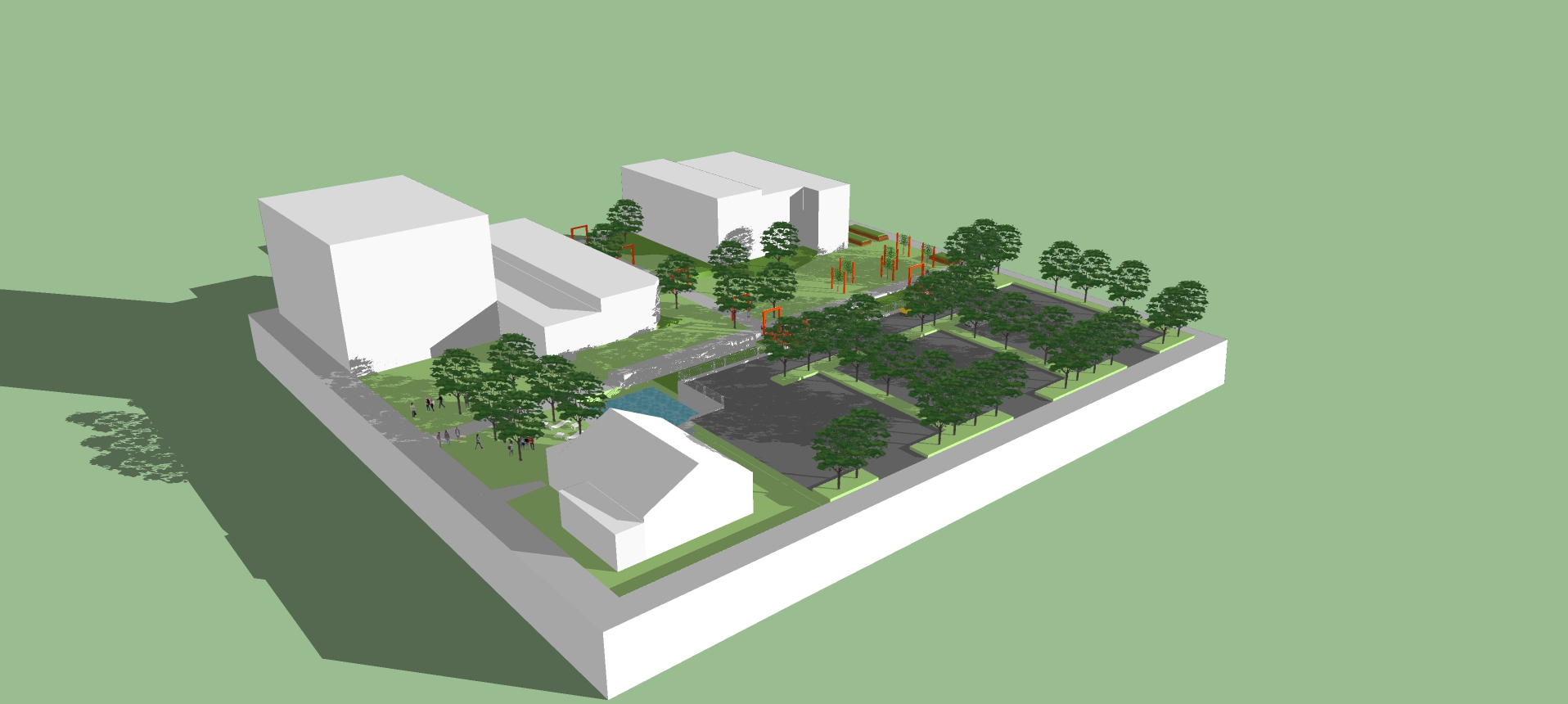
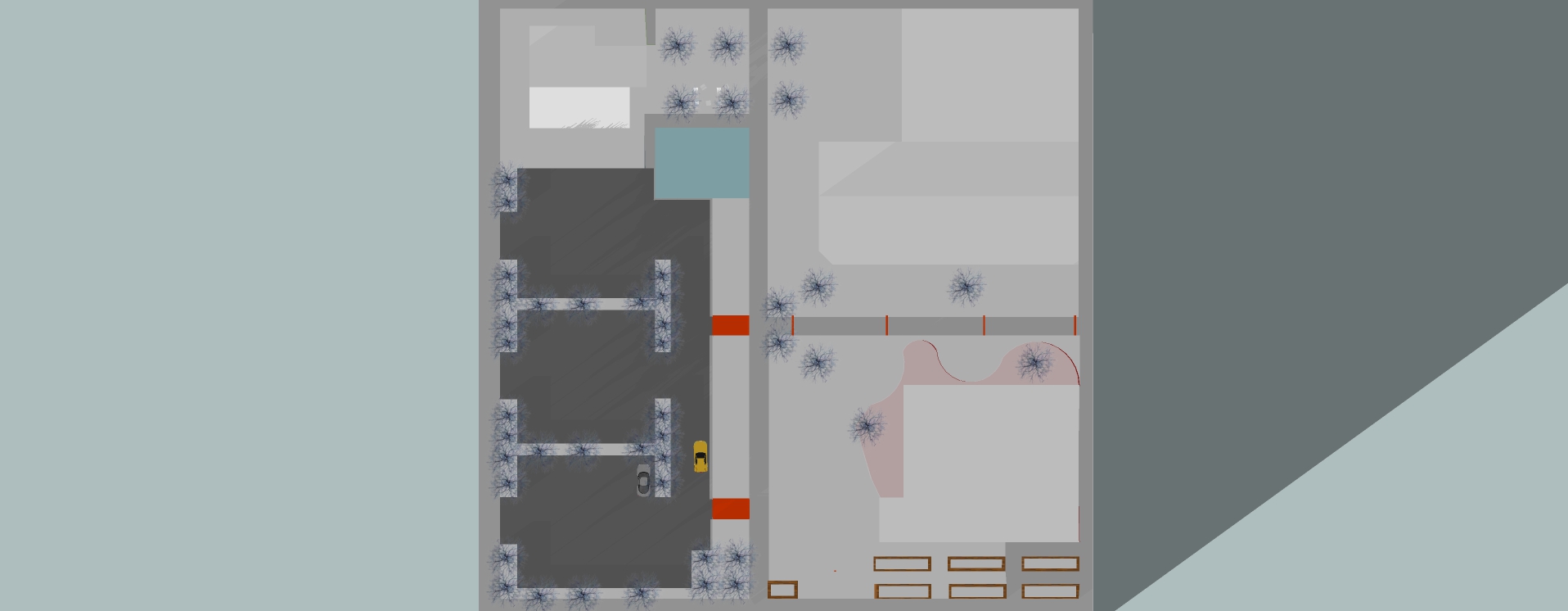
For this block, I propose that the night life of Savage’s be brought outside to activate the street and attract people downtown. A street-side beer garden, with an atmosphere that is both urban and relaxed would draw people to Washington Street, while the enhanced reputation would attract people to the nearby pocket park during the day. Workers from the Delaware County Court could lunch in the park and go to happy hour in the evening. Edible plantings on the corner near the MITS station would cohere to the neighboring urban farm. Finally, ample parking is integrated into the design without dominating the block. Plenty of trees in the parking lot shade cars and break the monotony of the horizontal plane.
I rendered my site design in SketchUp to demonstrate how the life cycle of deciduous trees will shape the site character. Trees not only provide numerous ecological benefits to the site, they also play a central role in defining space, color palette, and seasonal variety.
Early Autumn (September to Early October)
In early Autumn, the trees still hold all the leaves. Their deep green canopies act as a ceiling and cast broad shadows on the ground. The orange arches, pedestrian bridges, and espalier posts in my design contrast with the verdant landscape.
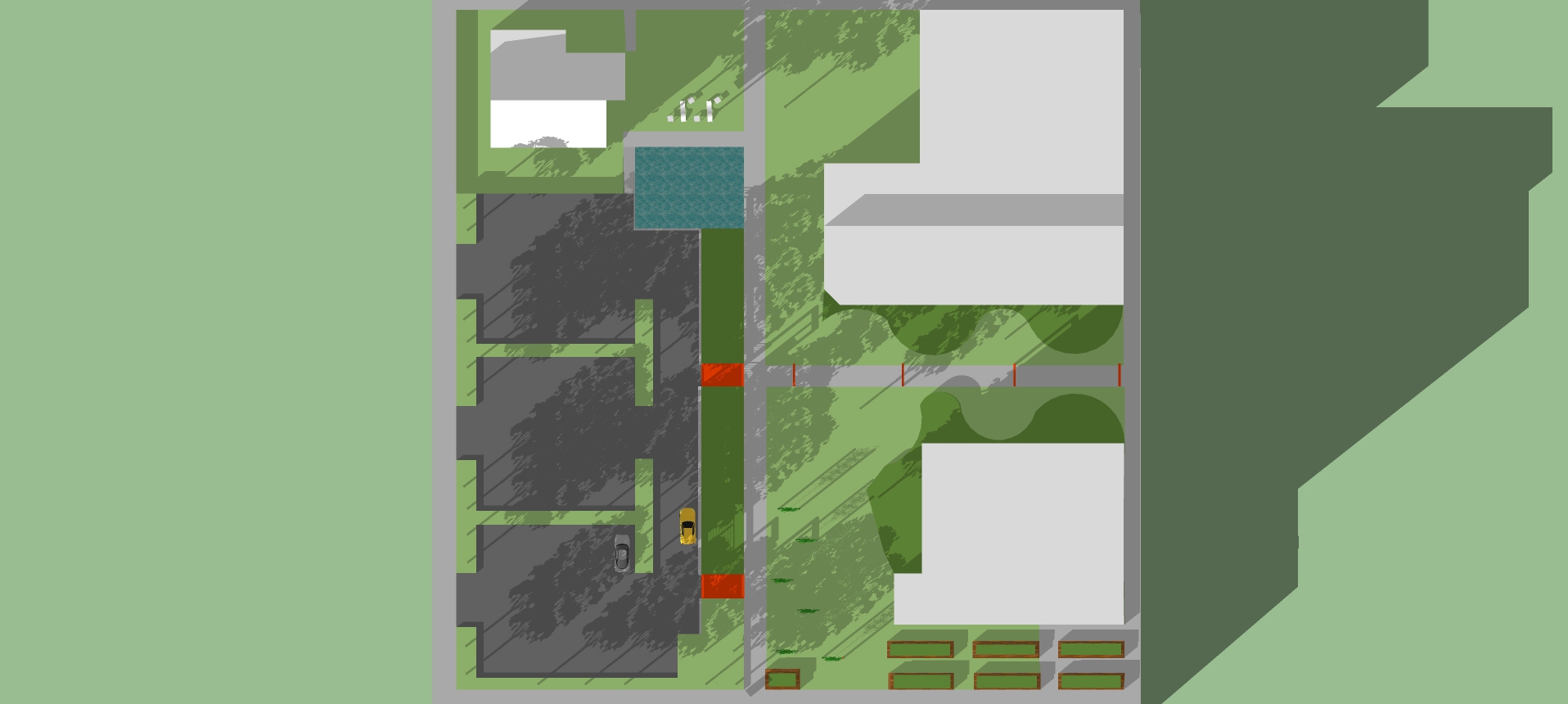
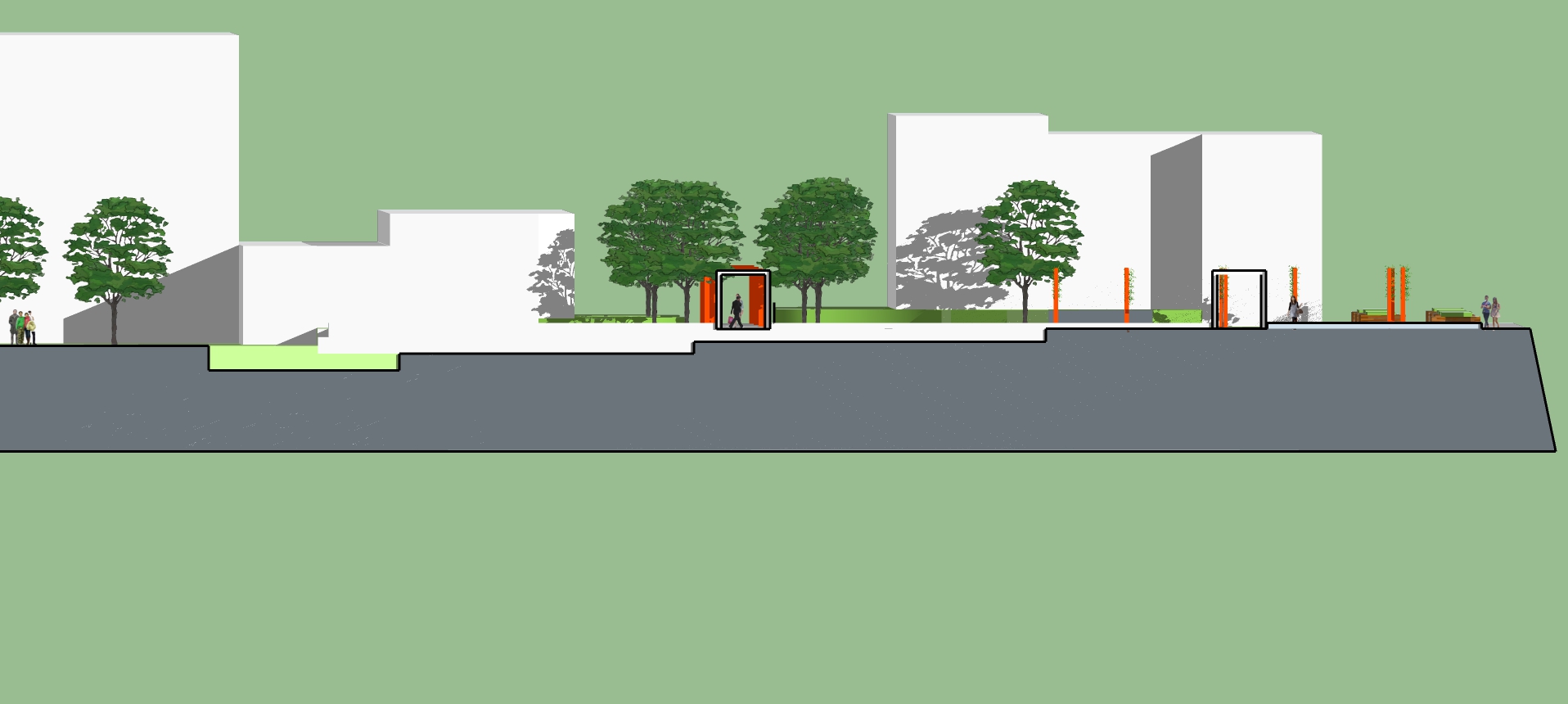
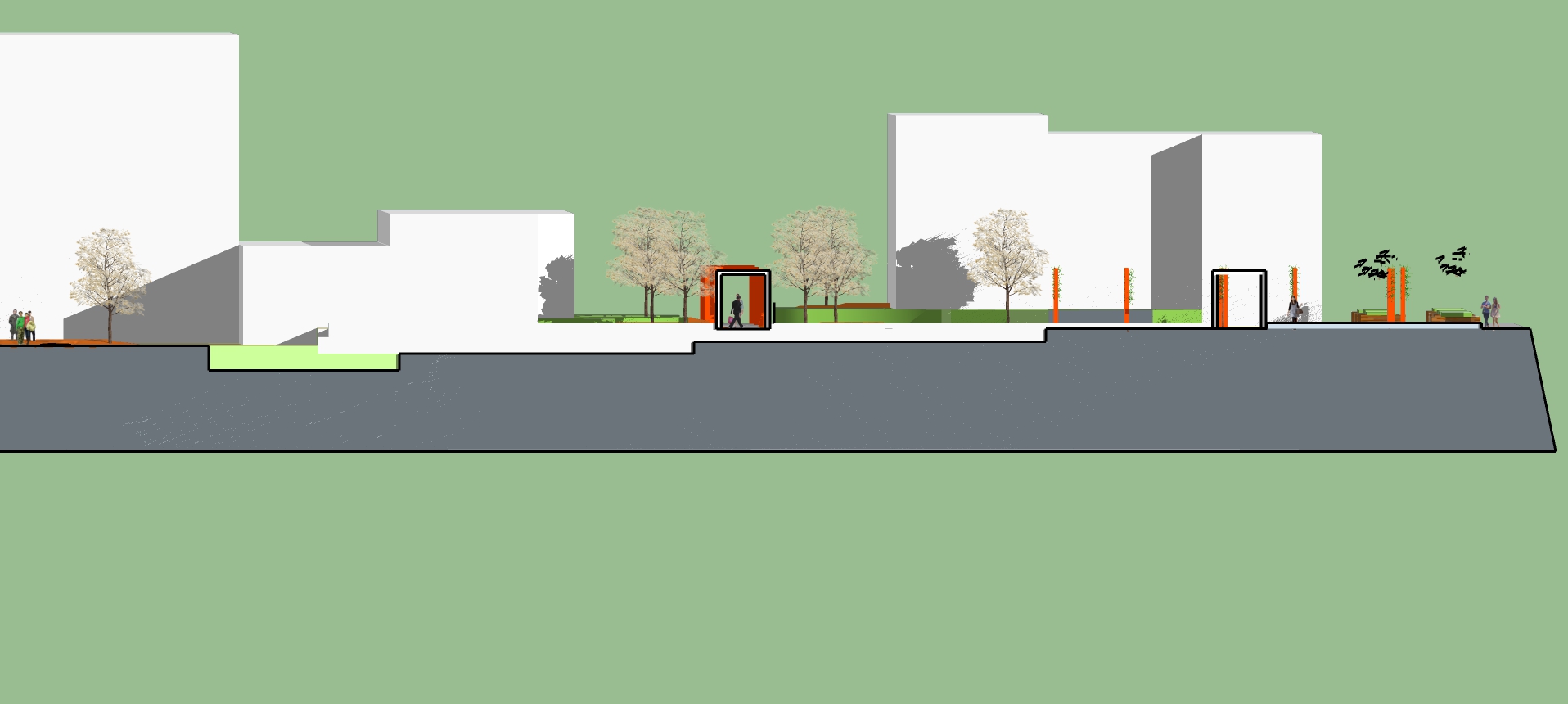
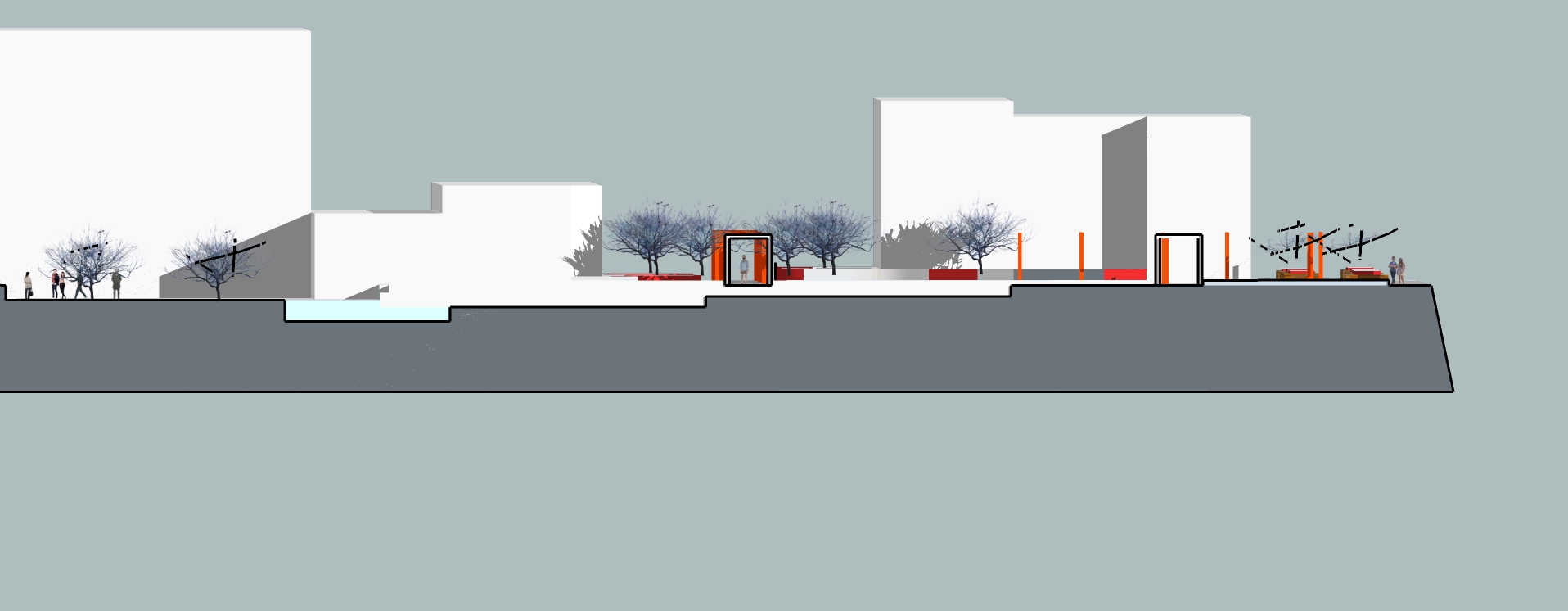
This section cuts through the terraced swale that terminates in a water feature, adjacent to the beer garden. It illustrates how the path parallel to the swale travels in and out of shade.
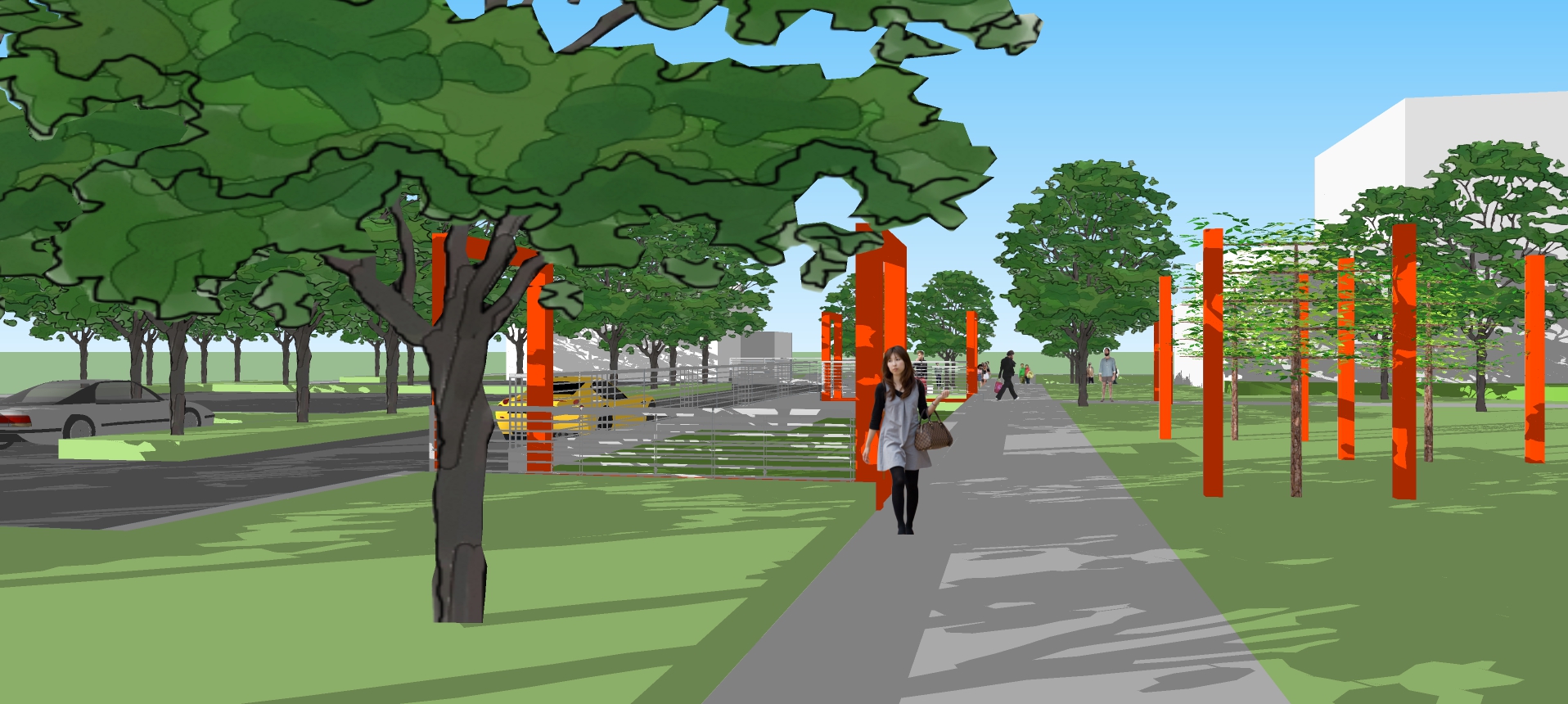
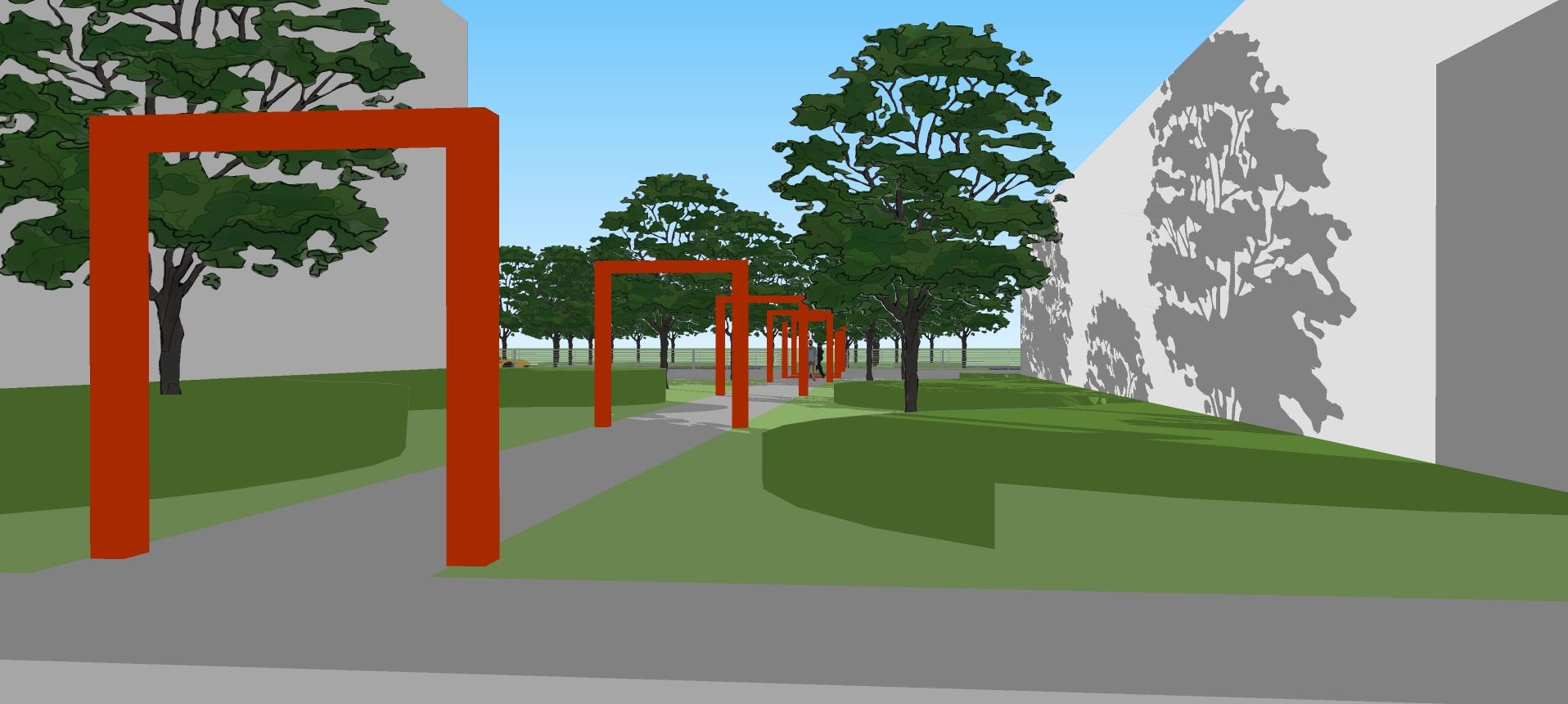
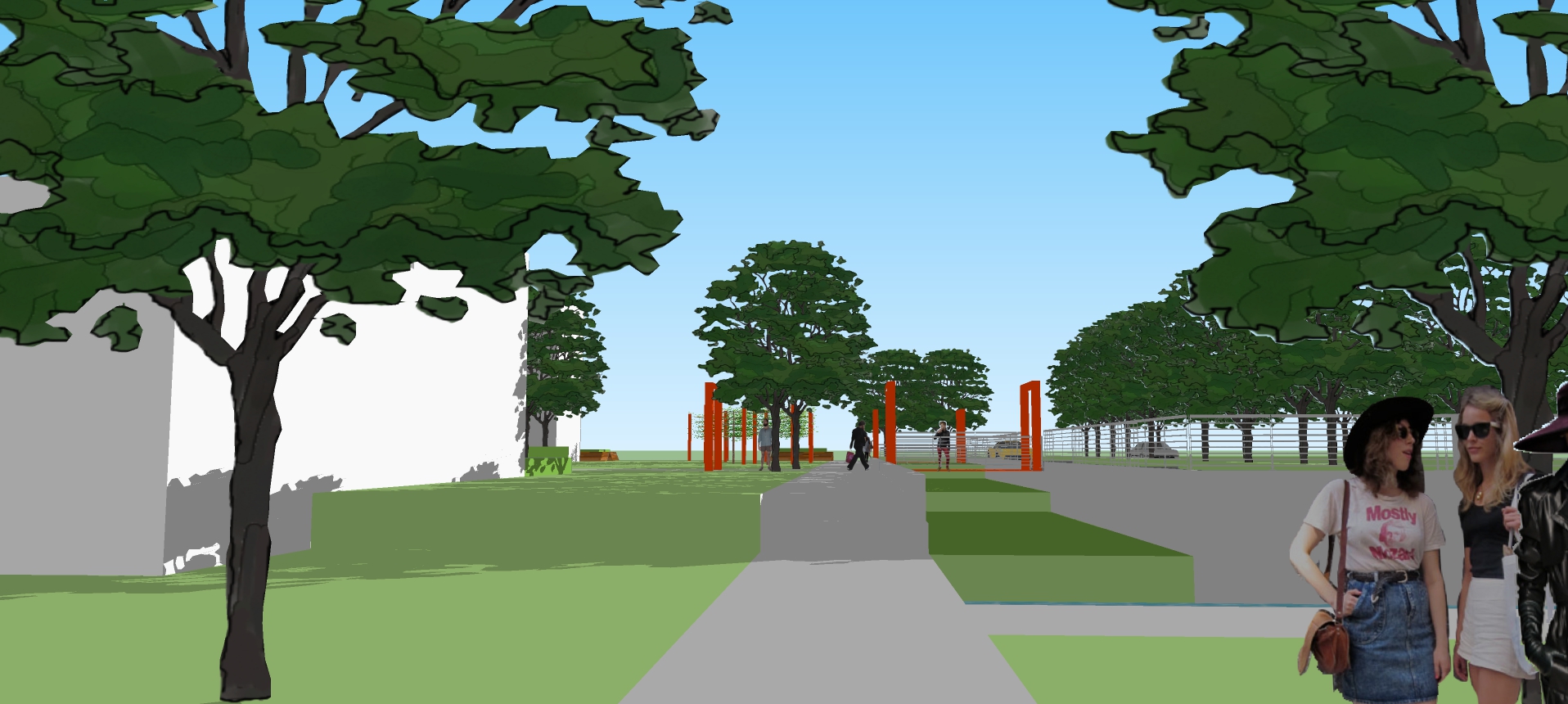
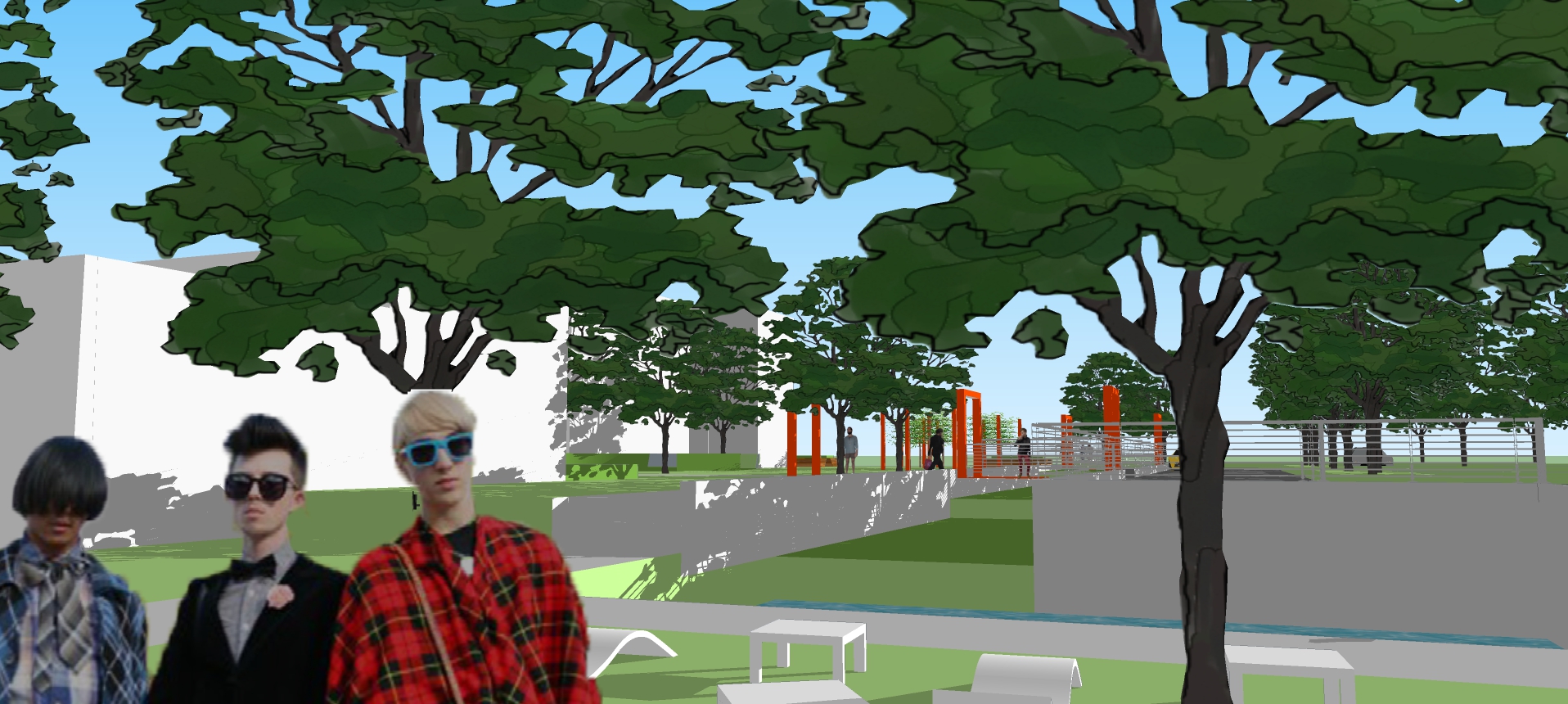
In the comfortable early autumn, people are out in full force, hanging out at the beer garden, or strolling through on the their lunch hour.
Mid Autumn (Mid October to November)
In the height of autumn, the deciduous trees are a riot of color and the leaves litter the ground in large dry brown, orange and red heaps. The variety of color dominates your attention, and the orange architectural elements no longer jump to your attention. The trees no longer blanket the ground with shade, but as the temperature drops, the sun is a welcome presence.
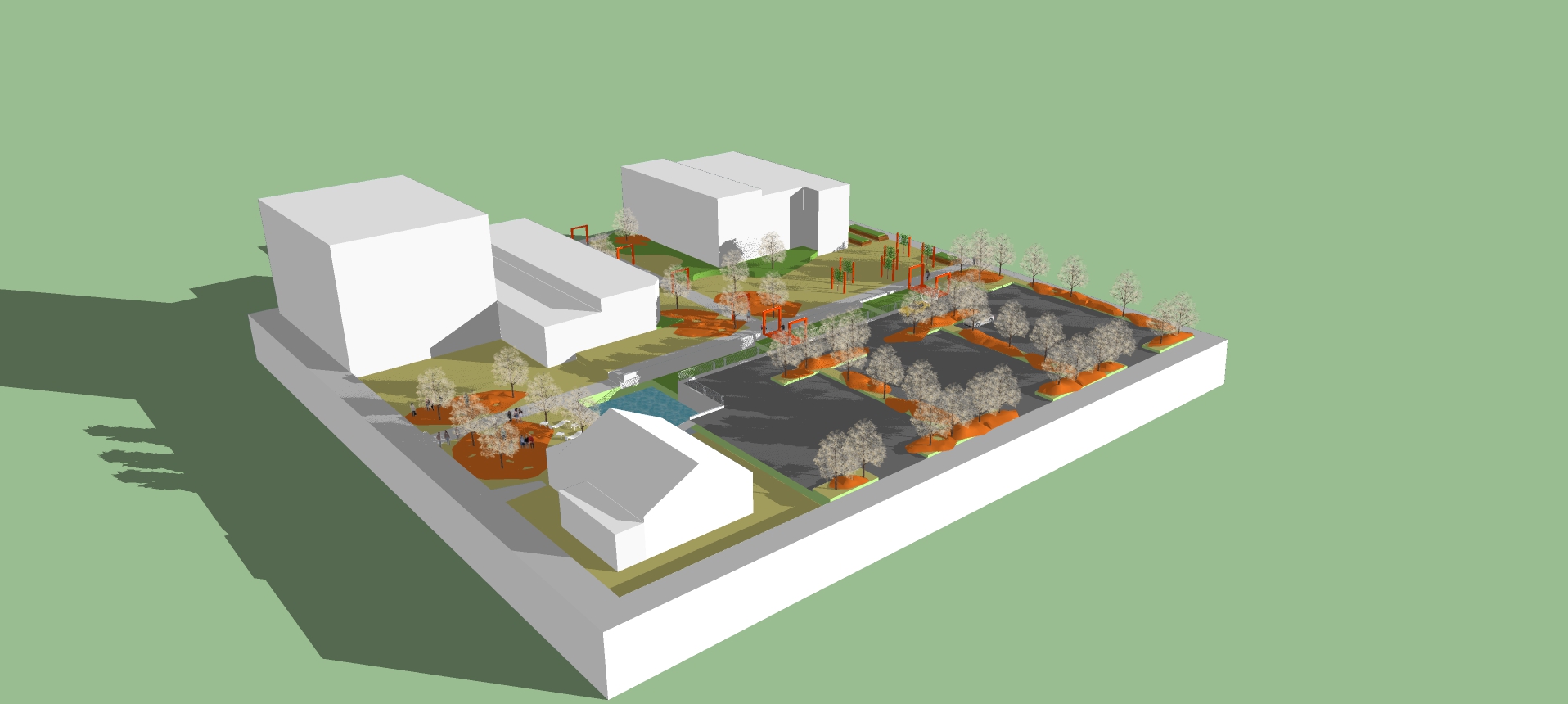
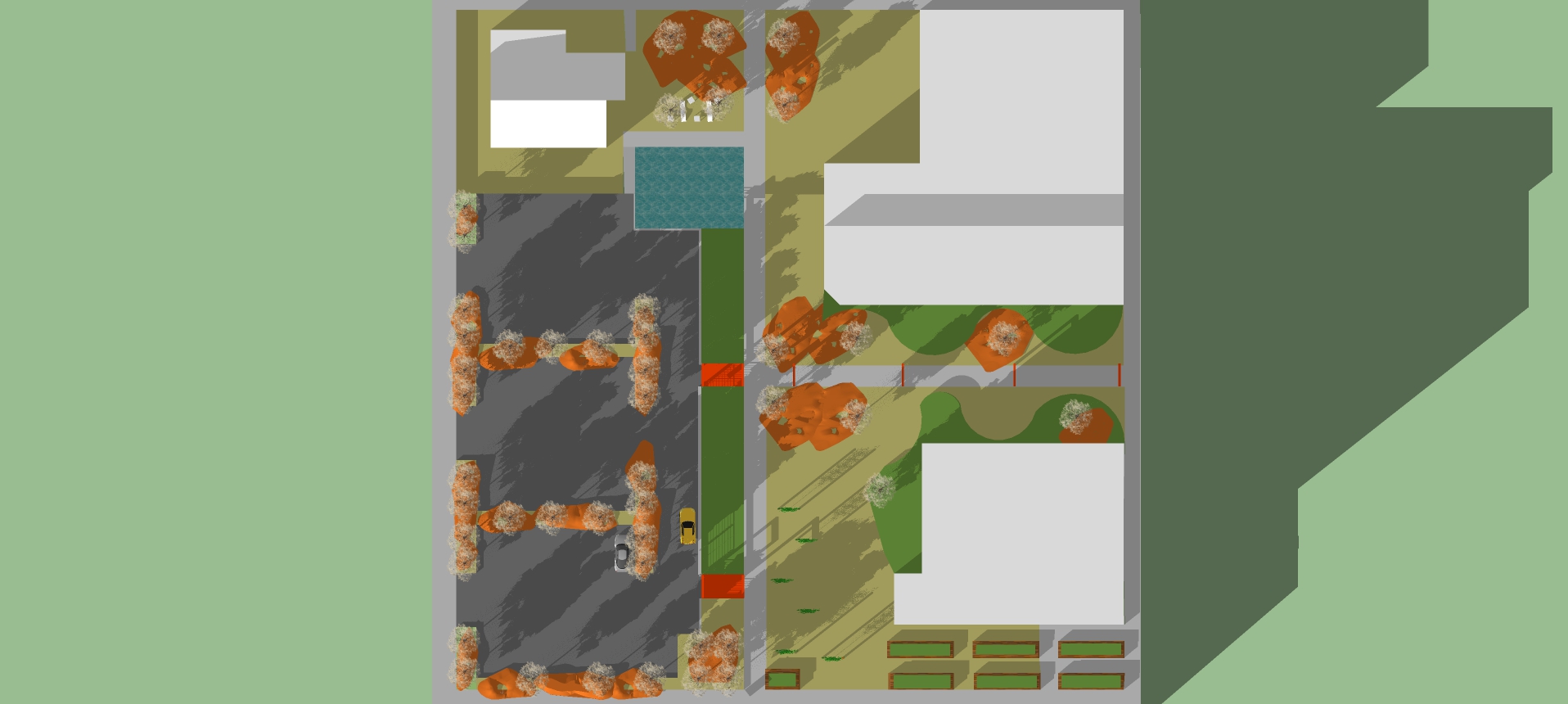

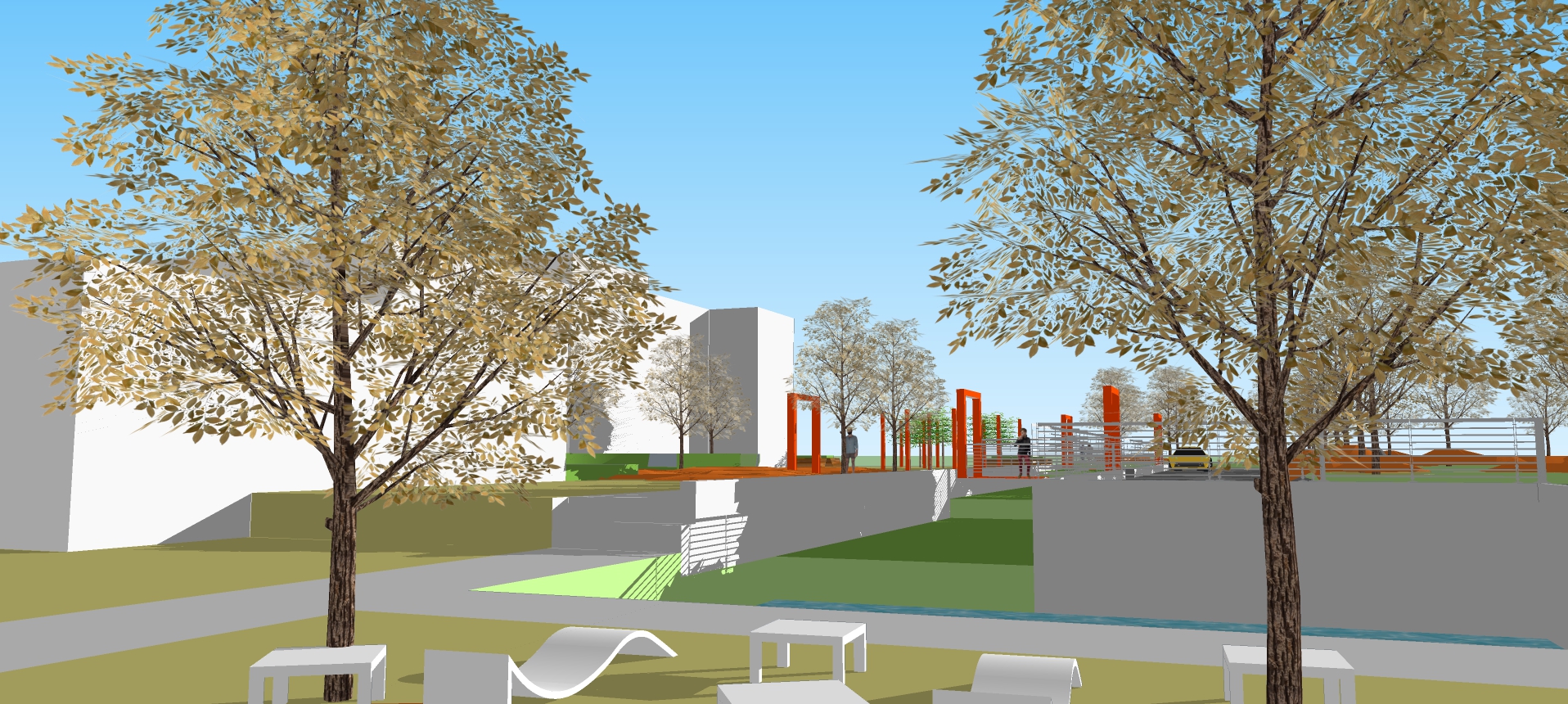 Fewer people sit and stay, but the autumn colors draw people outside for walks and strolls.
Late Autumn (Late November to Early December)
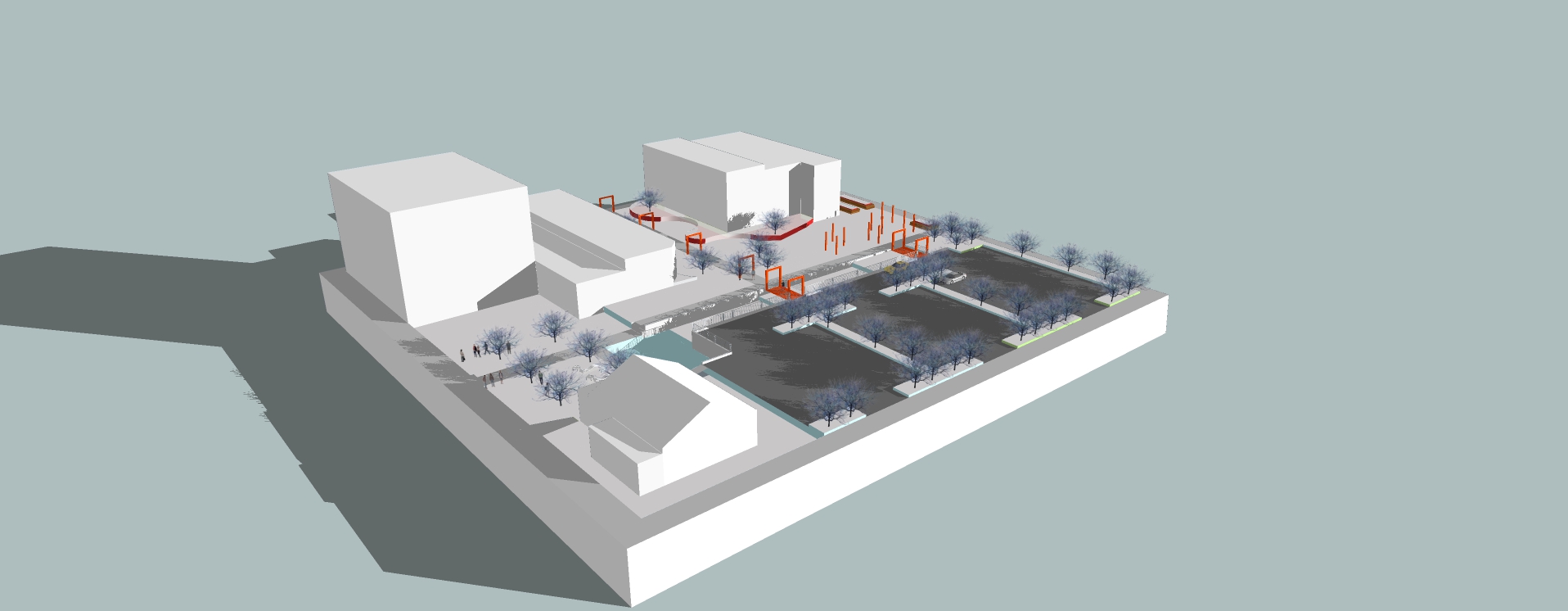
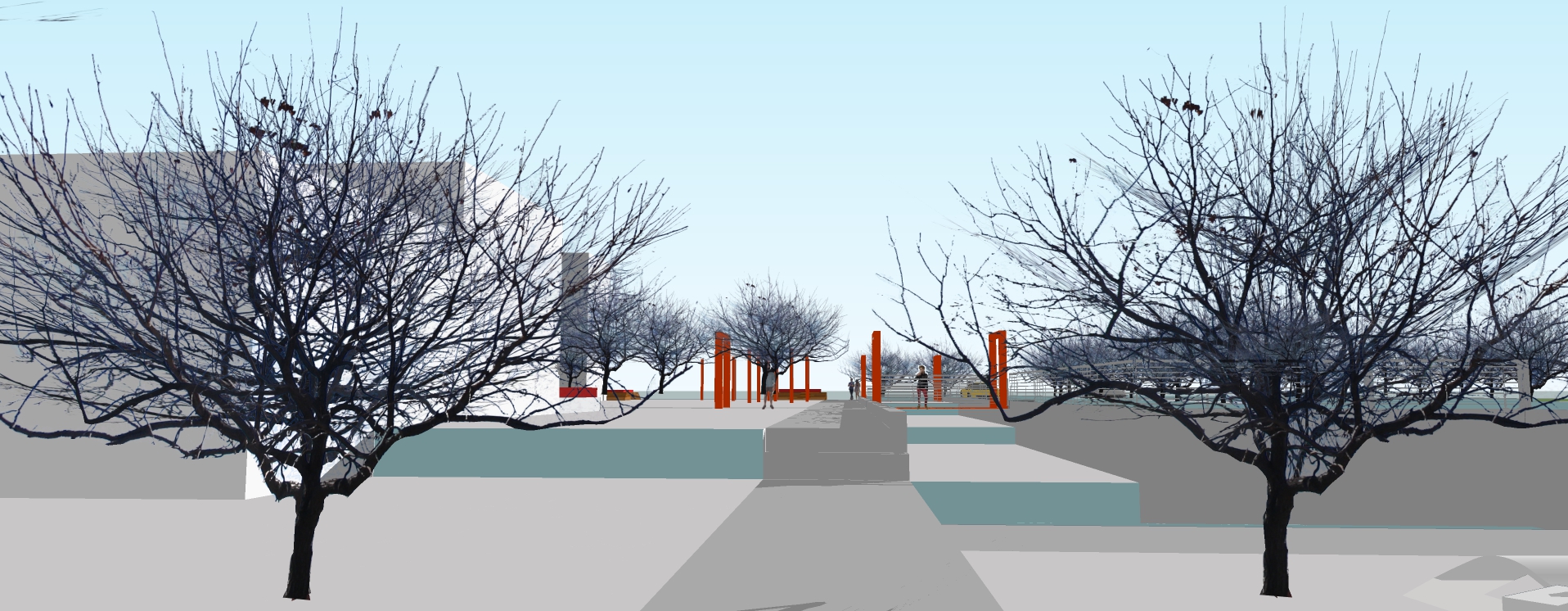
The leaves have fallen and are carried away. The bare branches of the trees are sculptural against the gray sky, while the first thin layer of frost creates a monochromatic scene. Shadows from the building and the orange architectural elements are thrown into sharp relief against the bare white ground, no longer competing with the dappled shadows of tree canopies. The orange pops from the monochromatic scene, like the flash of a red cardinal across a winter sky.

 Liz Sacks